Why Practice Grids Matter in Chinese Writing
Chinese characters are built from strokes arranged within an invisible square frame. Every character must fit neatly within the same square space. Practice grids make this invisible frame visible, training your eye and hand to place each stroke in the right position before you internalize the proportions and no longer need the guides.
Tianzige (Field Grid) - The Starting Point
Tianzige divides each character square into four equal quadrants with a thin cross. It is named after the word for "field," which it resembles. This is the most common grid for absolute beginners and primary school students. The four quadrants help writers understand the basic spatial relationships between strokes: top-left, top-right, bottom-left and bottom-right.
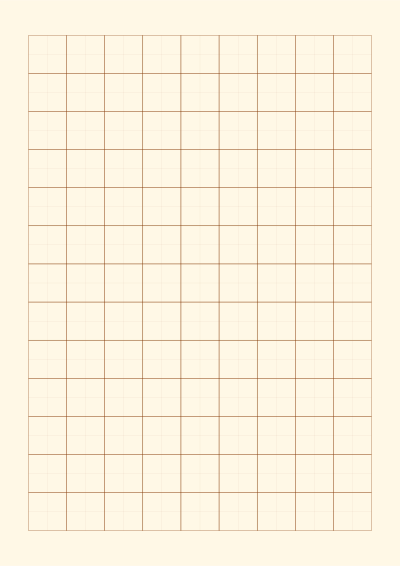
- Best for: Absolute beginners and children in grades 1 through 3.
- What it teaches: Basic stroke placement within the character frame.
- Cell size: Typically 15 to 20 mm for beginners and 10 to 12 mm for intermediate practice.
Tianzige is the first grid taught in Chinese primary schools. If you are starting from zero, start here.
Mizige (Rice Grid) - The Intermediate Grid
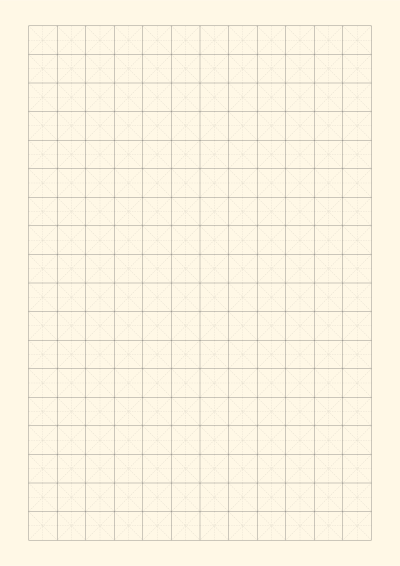
Mizige adds diagonal guidelines to the field grid, dividing the square into eight sections. It is named after the word for "rice," which the eight lines resemble. The diagonals help with characters that have diagonal or curved strokes. Mizige is the standard practice grid for intermediate learners and is used extensively in calligraphy training.
- Best for: Intermediate learners and brush calligraphy students.
- What it teaches: Diagonal stroke angles and overall character balance.
- Cell size: 12 to 18 mm is comfortable for most practice sessions.
Huigongge (Palace Grid) - The Advanced Grid
Huigongge is a specialized structure where each main square is surrounded by eight smaller squares in a 3x3 arrangement. This grid is named after the "return" or "circle" concept and is the preferred tool for serious calligraphy practice, providing precise reference points for complex characters.
- Best for: Advanced learners and serious calligraphy students.
- What it teaches: Precise spatial relationships and visual weight distribution.
Jiugongge (Nine Palace Grid) - The Full Grid
Jiugongge divides each area into a full 3x3 grid of nine equal squares. Unlike other formats, Jiugongge treats all nine cells as equal reference points. It is used in formal training and is especially effective for copying master works stroke by stroke.
Hardpen vs Brush Calligraphy Grids
There is an important distinction between grids designed for hardpen practice (fountain pen, pencil) and those designed for brush calligraphy. Hardpen grids tend to be smaller (8 to 12 mm cells) while brush calligraphy grids are larger (18 to 25 mm cells) to accommodate the wider and more expressive strokes of a traditional ink brush.
- Hardpen practice: Small cells from 8 to 12 mm for everyday writing.
- Brush practice: Large cells from 18 to 30 mm for expressive calligraphic work.
How to Practice Effectively
The most common mistake beginners make is copying characters too quickly. Chinese characters have a precise stroke order that builds muscle memory for speed and consistency. Always write strokes in the correct order, even on practice grids, and focus on one radical at a time.
- Write each character at least 10 times per session.
- Focus on one character or radical at a time for better retention.
- Compare your work to a model side by side frequently.
- Switch to Mizige once you can write consistently in Tianzige.
Printing Practice Grids with PaperMe
PaperMe includes all major character practice formats: Mizige, Huigongge, Jiugongge and Tianzige. Each template lets you adjust the cell size, line color and paper size. For beginner adults, 15 mm cells with a light gray grid on A4 is a comfortable starting point.
Try it in PaperMe Studio
Customize your template and download for free - no account needed.